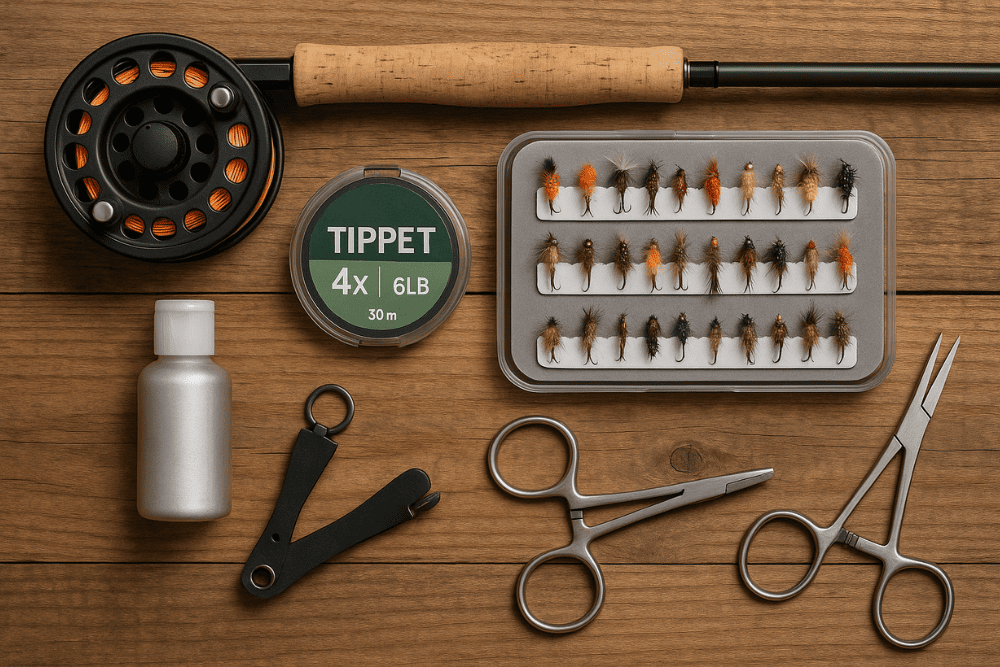

Stepping into fly fishing, or just looking to refine your setup, feels exciting. You get your fly fishing rods and fly reel sorted out. But then you see all the other bits and pieces making up essential fly fishing gear. What fly fishing accessories do you need?
It can feel a bit overwhelming initially. You’ve got the main fishing gear, like your fly rod and fly reel, but the right extras significantly affect the water. They make your time fishing smoother and often more successful, helping you catch fish.
We get it, you want gear that helps, not just weighs down your vest or pack. Let’s explore the critical fly fishing accessories that truly impact your day. These items help complete your fishing setup.
Essential Fly Fishing Accessories You Can’t Fish Without
Okay, let’s cut through the noise and focus on the essentials. Some gear isn’t just nice to have; it’s necessary for effective fly fishing. Without these items, you’ll struggle to present your fly correctly, let alone land a fish.
Think of these core fly fishing accessories as your absolute must-haves before hitting the water. They form the foundation of your supporting fishing gear beyond the rod and reel. These items are critical for presenting the fly properly.
Leaders and Tippet
Your fly line needs help transitioning smoothly to the tiny fly. That’s where leaders perform their critical function. A leader is a tapered line section, typically clear monofilament or fluorocarbon, connecting the thick fly line to the much thinner tippet.
Tippet is the very fine, level piece of line you tie your fly onto; brand examples include Orvis tippet. Choosing the right leader length, taper, and tippet size (rated in “X” sizes like 3X, 4X, 5X, 6X) depends on the target fish size, water clarity, and fly size. For instance, presenting a small fly to wary brook trout requires finer tippet than casting large streamers.
You’ll need several tippet spools in various sizes because tippet gets used up quickly as you change flies or break off on snags or fish. Always carry spare leaders and tippet spools. Fluorocarbon is less visible underwater and sinks faster, good for nymphs and streamers, while monofilament generally floats better, aiding dry fly presentation.
Fly Floatant
Want your dry flies to float high and convincingly on the water’s surface? You need fly floatant. This dressing prevents your carefully tied dry flies from waterlogging and sinking beneath the surface film.
Floatants come in several types: gel, liquid, paste, and powder (desiccant). Gel floatants are excellent for initial application before the fly gets wet. Powder desiccants work wonders for reviving a soggy fly on the stream, drying it out and reapplying floatant simultaneously.
Without floatant, effectively fishing dry flies is nearly impossible, especially for extended periods. Apply it carefully to the fly’s body and hackle before your first cast. Reapply whenever your fly starts to ride low or sink.
Forceps or Pliers
Unhooking fish quickly and safely is vital for catch-and-release practices. A pair of forceps or small needle-nose pliers designed for fishing allows you to grip the hook shank securely and remove it easily, minimizing handling time and stress for the fish.
Forceps are also incredibly handy for pinching down the barbs on hooks (always check local fishing regulations regarding barbed hooks). Many modern fishing forceps incorporate features like built-in scissors for cutting tippet or small needles for clearing paint or glue from hook eyes. Choose stainless steel or a quality alloy to prevent rust, especially if fishing in saltwater.
Nippers or Clippers
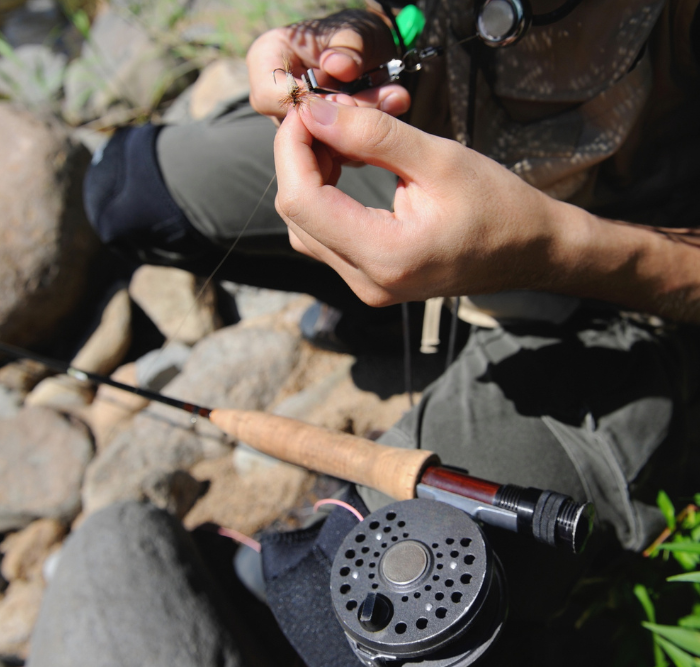
When changing flies or replacing tippet sections, you will constantly need to cut tippet material and trim the tag ends of knots. Nippers are small, sharp line clippers made explicitly for this task. Using dedicated nippers is far superior and safer than using your teeth.
Many anglers attach their nippers to a zinger or retractor clipped to their vest, pack, or wading belt for easy access. Some nippers include a small pointed tool (a bodkin or needle) for clearing clogged hook eyes. Keeping your nippers sharp ensures clean cuts, which helps prevent knot failure.
Accessories That Make Your Day Easier (Highly Recommended)
Once you have the absolute essentials covered, consider adding fishing gear that significantly improves your comfort, safety, and efficiency on the water. These items aren’t strictly required to catch fish. But they solve common frustrations and make your time pursuing fish much more enjoyable.
Most experienced fly fishers find these highly recommended fly fishing accessories become “can’t live without” items very quickly. They enhance the overall experience during your fishing trips. Consider these investments in smoother angling.
Landing Net
Landing a lively, decent-sized fish without a landing net can be chaotic and stressful for you and the fish. A net helps you secure the fish quickly, gently, and with more control. This reduces the chance of the fish escaping at the last second and minimizes handling and air exposure if releasing.
Look for fish-friendly mesh nets, such as soft rubber or specially coated nylon. These materials minimize harm to the fish’s protective slime coat and reduce hook tangles. The appropriate net size and handle length depend heavily on the type of fish you target and where; a small stream net for brook trout is very different from a large boat net needed for steelhead or big saltwater species.
Wading Staff
If you frequently wade in rivers with slippery rocks, strong currents, or uneven bottoms, a wading staff is a crucial safety equipment. It provides a vital third point of contact with the riverbed, significantly improving your stability. This dramatically reduces your chances of falling and taking an unexpected swim, potentially preventing injury or losing gear.
Many modern wading staffs are collapsible, folding down compactly to store neatly in a holster on your wading belt or pack when not actively needed. They’re an essential safety item that provides confidence when wading through challenging water conditions. Think of them as sturdy trekking poles specifically designed for river environments, a key item among wading accessories.
Vest, Pack, or Sling
You need an efficient way to carry all your essential fly fishing accessories, fly boxes, tools, and maybe even a water bottle or rain jacket. Traditional fly vests offer numerous pockets, promoting excellent organization and distributing weight across your shoulders. Modern sling packs provide quick access to contents by swinging the pack around to your chest without entirely removing it.
Backpacks provide the most storage capacity and are ideal for longer day trips, backcountry adventures, or bulky items like extra layers or lunch. The best choice depends on how much fishing gear you typically carry, the duration of your outings, and personal comfort preferences. Keeping your gear organized and easily accessible means less fumbling and more time with your fly in the water.
Fly Boxes
Simply stuffing your expensive and delicate flies into your pockets is a recipe for crushed hackle, bent hooks, and tangled messes. Fly boxes are designed to protect your investment in flies and keep them neatly organized for easy selection. You can find specialized boxes tailored for different types of flies and fishing situations.
Waterproof fly boxes with gasket seals are excellent for keeping dry flies from getting soaked by rain or accidental dunkings. Slim profile boxes fit comfortably into vest or pack pockets. Compartment boxes work well for nymphs and smaller flies. In contrast, boxes with slit foam or magnetic beds securely hold various sizes, including specific patterns like freshwater fly selections or bulky saltwater flies. Consider boxes based on your fly assortments, whether they are mostly wet flies, nymphs, or dries.
Strike Indicators
Detecting subtle strikes can be extremely challenging when nymphing (fishing subsurface flies without direct line tension), especially for beginners. Strike indicators act like bobbers in conventional fishing, providing a visual cue when a fish takes your fly. They attach to your leader at a specific depth.
Indicators come in various forms: brightly colored yarn treated with floatant, small foam pieces, plastic bubbles, or biodegradable putty. Each type has advantages and disadvantages regarding visibility, casting ease, sensitivity, and impact on the drift depending on water conditions and the weight of your flies. Using an indicator can significantly increase your hook-up rate when nymph fishing, particularly for detecting the light takes of smaller fish.
Polarized Sunglasses
These are arguably essential for most anglers, crossing the line from convenience to necessity. Polarized sunglasses possess special filters that dramatically cut down glare reflecting off the water’s surface. This ability allows you to see into the water much more clearly.
Enhanced vision helps you spot fish holding near structures, identify submerged rocks or logs to avoid snags, and read changes in depth or current seams. Importantly, they provide critical eye protection from harmful UV rays during long hours outdoors and offer a shield against errant casts (yours or others). Amber, copper, or brown lenses are generally versatile choices for freshwater fishing, while grey or blue mirror lenses excel in bright offshore or fishing saltwater conditions where intense sun protection is needed.
Level Up Your Game: Advanced & Specific Fly Fishing Accessories
Beyond the fundamental items and everyday conveniences, a range of fly fishing accessories caters to more specific needs or advanced techniques. These tools might help optimize your approach in particular situations or appeal to dedicated anglers seeking every possible advantage. You might not need these when starting, but they are worth knowing about as you progress.
These items often solve niche problems or provide data that helps in decision-making on the water. Some support related activities like fly tying. Consider these when you want to refine your approach further.
Stream Thermometer
Water temperature is a critical factor influencing fish behavior, metabolism, and insect activity (hatches). A simple stream thermometer allows you to measure the current water temperature quickly. Fish generally have preferred temperature ranges and can become sluggish or stressed in water that is too cold or warm.
Knowing the water temperature can help predict fish location (seeking thermal refuge) and activity levels. It also guides your fly selection – certain insect hatches are triggered by specific temperature thresholds, especially in the early season. This small, inexpensive tool provides valuable intelligence for making informed decisions on the water.
Specialized Knot-Tying Tools
While most essential fly fishing knots (like the improved clinch or surgeon’s knot) can be tied effectively by hand with practice, specific tools can make the process easier and more consistent. This is particularly true when dealing with cold, numb fingers, low light conditions, or vision challenges. Tools exist specifically for tying strong, reliable leader-to-tippet knots (like blood knots) or leader-to-fly-line connections (nail knots).
These tools help ensure you create strong, properly seated knots every time, which is vital for landing larger or stronger fish. Look into popular options like the Tie-Fast Knot Tyer or various nipper tools with integrated knot functions if you struggle with certain connections or want added reliability. Consistent knot strength is fundamental.
Line Cleaning Tools
A clean, well-maintained fly line casts more smoothly, shoots farther, and floats higher (for floating lines). Over time, fly lines inevitably pick up dirt, algae, scum, and other residues from the water. A dedicated line cleaning pad combined with a quality line dressing or treatment helps remove this buildup and restores the line’s slickness.
Regular cleaning improves casting performance and extends the lifespan of your expensive fly lines, potentially saving you money in the long run. Using products from brands like Scientific Anglers, specifically designed for line care, is a simple maintenance step often overlooked by anglers. Aim to clean your primary line every few outings for optimal results.
Fly Tying Tools (If You Tie)
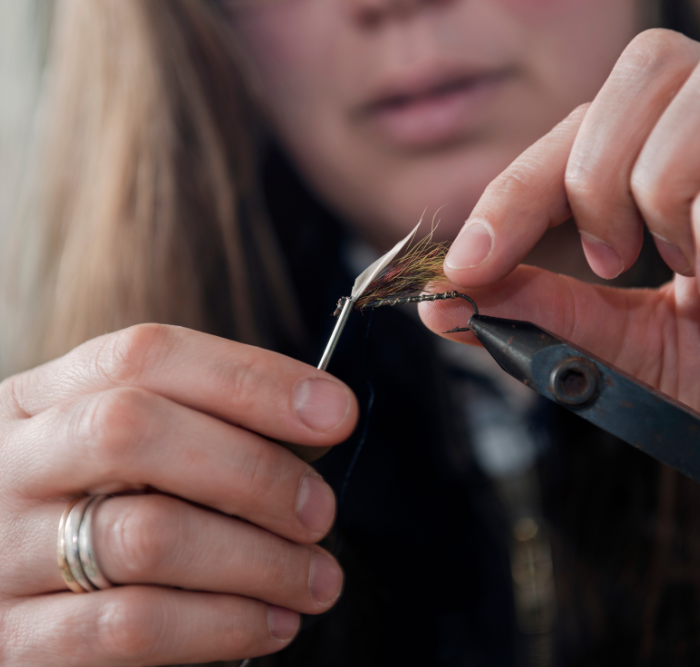
If you explore the rewarding craft of tying fly patterns, it opens up an entirely new category of specialized accessories and tools. A fly tying vise to hold the hook securely is essential, along with bobbins to have thread, sharp scissors for cutting materials, whip finishers for tying off the head knot, and hackle pliers for wrapping feathers. The list of potential tools and materials for fly tying fly variations is extensive.
Getting started typically involves acquiring a basic toolkit containing these core items. You can then expand your collection of tools and materials as your skills develop and tackle more complex patterns for various species, from panfish flies to intricate saltwater fly designs. Having the right tools makes creating your flies much more efficient and enjoyable.
Choosing the Right Fly Fishing Accessories for You
With such a wide array of fly fishing accessories available, how do you decide what you need and which items to buy? Start by carefully considering your particular needs and angling habits. What kind of water bodies do you often fish – small streams, large rivers, lakes, or saltwater flats?
Your budget is also a significant factor. You don’t always need the most expensive version of every accessory. However, investing in quality for critical items like reliable nippers, durable forceps, or a good landing net often pays off in the long run through better performance and longevity. Visiting a local fly shop or rod shop can provide valuable advice.
Think about your fishing style and the types of fly fishing trips. A minimalist angler focusing on small mountain streams might prioritize lightweight gear and carry fewer items than someone equipping a drift boat or planning extended backcountry adventures requiring more extensive fishing accessories. Choose gear that complements how and where; for example, specific gear is needed if
| Gear Carrier Type | Pros | Cons |
|---|---|---|
| Vest | Many pockets, excellent organization, distributes weight across shoulders. | Can be warm in hot weather, potentially bulky depending on load. |
| Sling Pack | Quick forward swing access, less body coverage than a vest (cooler). | Asymmetrical weight distribution, typically less capacity than larger packs or vests. |
| Backpack | Carries the most gear and larger items (lunch, jacket), ideal for hiking in. | Requires removal for full access to contents, can be overkill for short outings. |
| Hip/Waist Pack | Minimalist design, cooler in summer, stays low and out of the way of casting. | Limited storage capacity, can sag or slide down if heavily loaded or not worn properly with a wading belt. |
Consider the materials used in construction as well. Stainless steel or high-quality alloys for tools resist rust and corrosion. Waterproof or water-resistant fly boxes protect your flies, especially delicate dry flies. Look for durable fabrics and quality stitching in packs and vests, like those used in
Think about longevity and how well the item will be used in demanding environments. Sometimes, finding items with free shipping can help manage costs, and gift cards are great options for anglers wanting to choose their specific gear for fly fishing. For beginners, sometimes a reel combo package from reputable brands like Scott Fly Rods (sometimes referred to as Scott Fly) can be a good starting point that includes some basic accessories.
Don’t forget essentials like comfortable wading boots and functional fishing shoes, which can help you understand the most practical gear. A simple fly patch on your vest or pack can also offer quick access to frequently used flies without opening a box.
Ready to Elevate Your Skills?
Fly Fishing Classes
Whether you're just getting started or looking to refine your technique, our expert-led fly fishing classes will get you on the water with confidence. Browse our upcoming classes and book your spot today—spaces fill fast!
Taking Care of Your Gear
Your investment in quality fly fishing accessories will last much longer and perform better with a little routine care and maintenance. Always rinse metal tools like forceps and nippers with fresh water after use, especially after exposure to saltwater which is highly corrosive. Allow them to dry completely before storing to prevent rust and corrosion.
Keep nipper blades clean and sharp; some models allow for sharpening or have replaceable blades. Clean your fly line regularly using recommended line cleaners and dressings to maintain performance. Store your fly boxes closed securely so flies don’t get crushed, damaged, or fall out during transport or storage.
Before each fishing trip, visually inspect leaders and tippet material for any nicks, abrasions, or wind knots that could weaken them and lead to break-offs. Rinse wading boots and check for potential leaks. Proper storage and regular maintenance ensure your fishing gear is always ready to perform when you hit the water. An organized and prepared angler is often more successful and less frustrated.
Conclusion
Getting correctly set up for fly fishing involves more than selecting a fishing rod and matching a reel. The right collection of fly fishing accessories truly enhances your efficiency, comfort, and overall experience on the water. Each piece plays a significant role, from essentials like leaders, tippet, and floatant to beneficial items like landing nets, wading staffs, and polarized sunglasses.
Carefully consider how and where you often fish to select the best fly fishing accessories for your needs. Don’t feel pressured to buy every gadget available all at once. Start with the essentials and gradually add other pieces of fly fishing gear as you gain experience and identify what makes your time fishing more productive and enjoyable.
Good gear won’t magically guarantee you’ll catch fish every time, but quality fishing accessories make the process smoother, safer, and ultimately more fun. Equip yourself wisely and enjoy your adventures on the water. Happy fishing.
FAQs
- Leaders and tippet
- Fly floatant
- Forceps or pliers
- Nippers or clippers
Leaders help transition the thick fly line to the tiny fly smoothly. Tippet is the fine line tied to the fly. Choosing the right size depends on fish size, water clarity, and fly size.
Fly floatant keeps dry flies floating on the water surface by preventing them from getting waterlogged and sinking.
Use stainless steel or quality alloy forceps or needle-nose pliers designed for fishing, which help unhook fish safely and pinch down barbs if needed.
Nippers allow for clean cutting of tippet and trimming knot ends, which helps prevent knot failure and makes fly changes easier.
- Landing net for safely landing fish
- Wading staff for stability in rivers
- Vest, pack, or sling for carrying gear
- Fly boxes for organizing flies
- Strike indicators for detecting nymph strikes
- Polarized sunglasses to reduce glare and protect eyes
Choose based on your gear load, comfort preference, fishing style, and temperature conditions:
- Vest: Good organization, distributes weight but can be warm
- Sling Pack: Easy access, cooler but less capacity
- Backpack: Large capacity but can be cumbersome
- Hip Pack: Minimalist and cool but limited storage
Yes, such as stream thermometers, specialized knot-tying tools, line cleaning tools, and fly tying tools if you make your own flies.
Rinse metal tools after use, especially in saltwater. Keep blades sharp. Clean fly lines regularly. Inspect leaders and tippets before fishing. Store flies securely.
Consider where you fish most often, your budget, your fishing style, and gear durability. Quality items often last longer and perform better.
No. Start with the essentials like leaders, tippet, forceps, nippers, and floatant. Add other gear gradually as you gain experience.