
Key Takeaways
- The Sage Foundation is an American-made, fast-action fly rod built on Graphite IIIe technology at Sage’s Bainbridge Island, Washington facility—delivering authentic Sage performance without the premium-series price tag, with rod-only pricing typically ranging from $325–$475 and complete outfits running $500–$900. The Sage Foundation fly rod is priced at $495.00 and offers excellent value for the money.
- Built with a fast action that balances excellent casting power and forgiveness, the Foundation serves trout, bass, carp, and light saltwater species effectively, making it ideal as a first serious fly rod or a dependable backup for experienced anglers. The 5wt model is lightweight, weighing just 3 1/16 oz.
- The series spans 4wt through 9wt in 9-foot, 4-piece configurations, with the 9’ 5wt serving as the most versatile all-around trout model for dries, nymphs, and small streamers.
- Construction features include Fuji ceramic stripper guides, hard chrome snake guides, a black anodized aluminum reel seat, and quality cork grips—all protected by Sage’s lifetime warranty and backed by decades of manufacturing expertise.
- This guide compares the Foundation to other Sage rods, provides concrete setup advice for lines, reels, and leaders, and answers common questions to help you determine if this rod fits your fishing needs, serving as a comprehensive Sage Foundation fly rod review.

Overview: What Is the Sage Foundation Fly Rod?
The Sage Foundation represents Sage’s commitment to making quality fly fishing accessible without compromising the craftsmanship that built their reputation. This detailed rod review covers the Foundation’s performance, features, and value, providing anglers with an in-depth look at what sets this rod apart. As an American-made, fast-action freshwater-focused series built on Graphite IIIe, the Foundation occupies a strategic position in the market—sitting comfortably between entry-level imports and Sage’s premium US-made flagship rods. It’s designed for anglers who understand that a fly rod is an investment in their fishing future and want something that will grow with their skills.
Sage has earned its place among the world’s most respected fly rod brands since the early 1980s, handcrafting rods one at a time on Bainbridge Island, Washington. The company became synonymous with fast-action graphite and continuous innovation in blank design, and the very foundation of that reputation carries through to every rod that leaves their facility—including the Foundation series. The same 27 skilled sets of hands that build Sage’s top-tier models also make the Foundation, ensuring consistent quality across price points.
The Foundation series covers standard line weights from 4wt through 9wt, all in 4-piece configurations with a standard 9-foot length. The 9’ 5wt stands out as the most popular model, serving as the quintessential all-around trout rod for anglers across North America and Europe. When launched, the rod is typically priced around the mid-$300 range (often listed at about $325), with full outfits assembled by fly shops ranging from $500–$900, depending on reel and line selections.
Visually, the Foundation maintains an understated elegance with its matte-black Graphite IIIe blank, black-anodized aluminum reel seat, quality cork grip, and chrome guides—all protected by a durable black nylon rod tube and Sage-embroidered cloth bag. This isn’t a flashy rod designed to impress onlookers; it’s a serious fishing tool built to perform season after season.
Sage’s Design Philosophy & Where the Foundation Fits in the Lineup
Understanding where the Foundation sits within Sage’s tiered lineup helps clarify its value proposition. Sage rods generally fall into three categories: accessible entry-level models (such as the Foundation), mid- to high-performance series (such as the Sonic), and flagship models (the X and R8 Core) that represent the cutting edge of rod technology. All share design DNA rooted in Sage’s decades of fast-action expertise, but differ in materials, refinements, and price.
The Foundation uses proven Graphite IIIe technology that previously powered higher-end Sage fly rods. By repurposing this established blank material, Sage delivers a rod with authentic “Sage feel” at a more approachable price—around $325–$475 versus $800+ for premium models. This isn’t outdated technology being recycled; it’s battle-tested graphite that continues to perform at a level that satisfies demanding anglers.
Where rods like the Sage Sonic offer newer blank technology and a more refined feel, and the Sage X or R8 Core deliver advanced graphite with higher recovery rates and exceptional sensitivity, the Foundation prioritizes something different: dependable performance and durability paired with a forgiving yet decisive fast action. You won’t find the bleeding-edge lightness or ultra-sensitive feedback of flagship rods here, but you will find a rod that casts beautifully, handles fish confidently, and forgives timing mistakes while you refine your stroke.
Sage Fly Rods Comparison
Sage has long been recognized as a leader in the world of fly rods, offering a diverse lineup that caters to every angler’s needs—from entry-level enthusiasts to seasoned pros. The Sage Foundation fly rod carves out a unique niche within this lineup, delivering a blend of excellent casting power, fast action, and high performance at a price point that’s accessible to a wide range of anglers.
Compared to other Sage rods, the Foundation stands out for delivering the signature Sage feel and performance without the premium price tag. While flagship models like the Sage X and R8 Core push the boundaries of advanced materials and ultra-sensitive feedback, the Foundation fly rod focuses on providing a high-performance blank that offers both power and smooth, effortless control. This makes it an ideal choice for anglers who want a rod capable of handling a variety of fishing situations—whether you’re casting dry flies on a quiet river or targeting bass and light saltwater species.
Other rods in the Sage lineup, such as the Sonic or Pulse, may offer incremental improvements in sensitivity or specialized features. Still, the Foundation’s fast-action rod design ensures that it holds its own in terms of casting distance, line speed, and versatility. The Foundation fly rod is particularly well-suited for those who want a rod that delivers both accuracy and distance, making it a reliable tool for freshwater and saltwater adventures. For more information on the best fly fishing rods, explore our expert guide.
In terms of value, the Sage Foundation fly rod is hard to beat. It brings together the essential elements that have made Sage a trusted name—quality craftsmanship, a high-performance blank, and the ability to deliver smooth, powerful casts—at a price that represents excellent value in today’s market. For anglers seeking a fast-action rod that doesn’t compromise on performance or control, the Foundation fly rod is a standout choice among Sage rods and other rods in its class. Whether you’re new to the sport or looking to add a dependable workhorse to your collection, the Sage Foundation fly rod delivers the performance and versatility that modern anglers demand.
Construction, Materials & Components
The physical build of a fly rod determines everything from casting feel to long-term durability. The Sage Foundation employs thoughtful construction choices that prioritize performance and reliability without the exotic materials that drive up costs in premium models.
Graphite IIIe Blank Technology
At the heart of the Foundation lies Sage’s Graphite IIIe—a mid-modulus graphite system that combines excellent strength with fast recovery. Sage developed this graphite blend through years of refinement, originally deploying it in higher-end rods before bringing it to this more accessible price point. The result is a high-performance blank that feels crisp and powerful without the “nervous” or overly stiff character that can plague ultra-light, high-modulus rods.
For developing casters, this means a rod that provides feedback on line position and timing without punishing imperfect strokes. The blank features a matte black finish that reduces rod flash and glare over the water—a small detail that matters when you’re sight-fishing to spooky trout in clear water. The fast-taper design concentrates power in a strong butt section while maintaining a responsive tip suited to modern weight-forward fly lines.
Guides and Hardware
The Foundation features Fuji ceramic stripper guides near the butt section, providing smooth line shooting and long-term durability against the friction of shooting line through countless casts. Above these, hard-chrome snake guides and a tip-top handle the running line, explicitly chosen for corrosion resistance and slick line handling that reduces wear on your fly line.
The black anodized aluminum up-locking reel seat provides secure reel attachment with a clean aesthetic. On heavier models like the 7wt, 8wt, and 9wt, Sage adds a fighting butt for additional leverage when battling larger fish—steelhead, bass, carp, or light saltwater species that test both rod and angler.
Grip and Ergonomics
Trout weights (4wt through 6wt) feature a snub nose half-wells grip that fits comfortably in most hands while providing the control needed for accurate presentations. Heavier freshwater and bass weights step up to full-wells grips with fighting butts for added leverage during extended fights. The cork quality throughout the line is notably good for this price point—dense enough to withstand seasons of use while remaining comfortable during all-day casting sessions.
Protection and Packaging
Each Foundation fly rod ships with a Sage-embroidered cloth bag and a durable black nylon-covered rod tube with a divided liner. This packaging underscores the rod’s intent as a long-term fishing tool rather than a disposable starter stick—you’re buying equipment designed to protect your investment through years of travel and daily use.
Rod Action, Feel & On-the-Water Performance
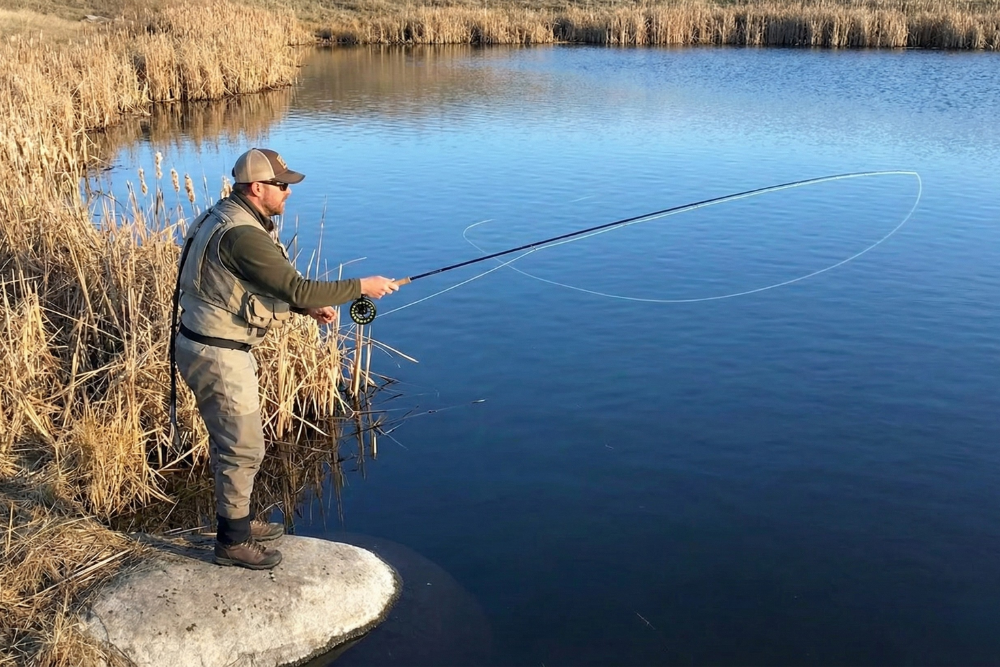
The Sage Foundation delivers an actual fast action characterized by a firm butt and mid-section paired with a progressively flexible tip. This combination generates the line speed needed for distance and wind penetration while maintaining enough forgiveness to help developing casters find their timing. With the Foundation, anglers can confidently hit their target on the water, making accurate and successful casts every time.
Casting Feel
The Foundation loads best with slightly aggressive weight-forward trout lines—think Rio Gold, Scientific Anglers MPX, or Airflo SuperFlo Elite—particularly within the 20–50 foot range where most freshwater fishing happens. The tip recovers quickly enough to generate tight loops without the razor-fast snap of Sage’s top-tier X-series rods. This actually benefits intermediate casters who need to feel the rod load during the casting stroke rather than having the line seemingly launch itself.
When you pick up a 9’ 5wt Foundation and work out 35 feet of line on a local freestone river, you’ll notice effortless control through the casting arc. The rod communicates clearly when it’s loaded and ready to deliver, which accelerates skill development for newer anglers while providing enough power for experienced casters to execute advanced techniques.
Short-to-Mid Range Performance
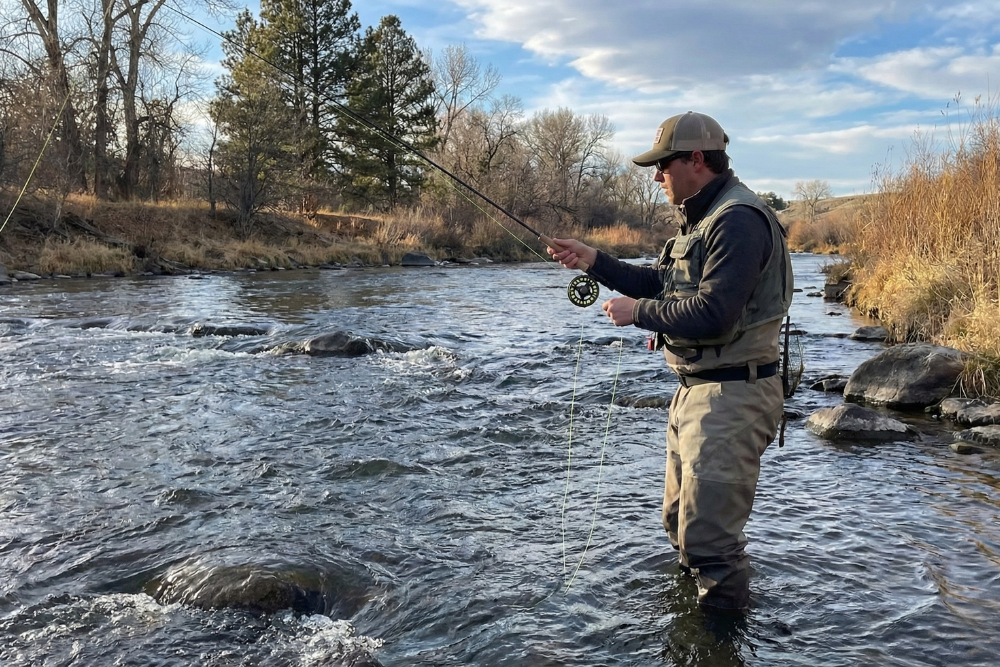
Where the Foundation truly shines is in the 25–45 foot window typical of trout fishing on medium rivers and streams. Accuracy comes naturally once you’ve calibrated your stroke to the rod’s timing. The flexible tip aids roll casts and single-hand mends when nymphing or fishing dry-dropper rigs—essential skills on western freestone rivers, where drag-free natural drift separates successful anglers from frustrated ones.
Casting a #16 Parachute Adams with a #18 beadhead dropper on 5X tippet, you’ll appreciate how the rod protects light leaders during the forward stroke while still delivering enough power to straighten your rig at 40 feet. This balance between protection and authority defines the Foundation’s character.
Long-Range and Wind Performance
The stiff butt and fast action allow substantial overhead casts past 60–70 feet in capable hands—valid on bigger western rivers or windy stillwater reservoirs where fish cruise beyond comfortable range. The 5wt and 6wt models carry enough backbone for weighted nymph rigs and small streamers, even on breezy days when softer rods struggle to punch through headwinds.
Line Control and Mending
Modern trout fishing demands constant line manipulation for proper presentations. The Foundation’s lively tip and solid mid-section make reach mends, stack mends, and on-the-water corrections straightforward. Whether you’re managing a long drift through a complex seam or repositioning the line around conflicting currents, the rod responds predictably to your inputs.
Fatigue and All-Day Use
Swing weight falls in the moderate range—light enough that most anglers won’t tire over a full day of casting, but with enough substance that beginners can actually feel what the rod is doing throughout their stroke. Ultra-light rods can mask timing feedback that developing casters need; the Foundation avoids this trap while remaining comfortable through marathon sessions on productive water.
Models, Lengths, Line Weights & Choosing the Right Setup
The Foundation lineup spans from 4wt to 9wt, primarily in 9-foot lengths with 4-piece configurations for convenient travel. This range covers everything from technical dry fly work on spring creeks to chasing bass and carp on warm stillwater.
Core Models at a Glance
| Model | Weight | Best Applications |
|---|---|---|
| 9’ 4wt (490-4) | 2.88 oz | Smaller streams, technical dries, light tippets |
| 9’ 5wt (590-4) | 3.06 oz | All-around trout: dries, nymphs, light streamers |
| 9’ 6wt (690-4) | ~3.1 oz | Bigger flies, wind, larger rivers, trout/bass crossover |
| 9’ 7wt | ~3.5 oz | Warmwater bass, carp, light inshore |
| 9’ 8wt | ~3.8 oz | Larger bass bugs, steelhead, redfish, stripers |
| 9’ 9wt | ~3.94 oz | Heavy freshwater predators, robust inshore targets |
Matching Rod Weight to Target Species
4–5wt: These weights handle primary trout fishing across mountain streams, meadow creeks, and tailwaters. The 5wt remains the most versatile choice for anglers who fish varied water and want one rod that handles small dry flies through moderate streamers.
6–7wt: Step up when facing bigger western rivers, streamer-focused trout approaches, or smallmouth bass. The 6wt works exceptionally well for anglers who split time between trout and warmwater species or regularly encounter wind.
8–9wt: These saltwater weights tackle larger bass bugs, carp in lakes, pike in lighter setups, and entry-level saltwater flats fishing. The 8wt with its fighting butt provides enough power for redfish, schoolie stripers, or steelhead, where heavier flies and robust fish demand backbone.
Water Type Considerations
For small-to-medium freestones and tailwaters where presentation trumps distance, the 9’4wt or 5wt delivers the accuracy and delicacy needed. Lakes, stillwaters, and rivers with frequent wind or weighted rigs call for the 9’6wt’s additional authority. Boat-based bass or carp fishing on larger impoundments benefits from 7–8wt models that handle air-resistant flies and powerful runs.
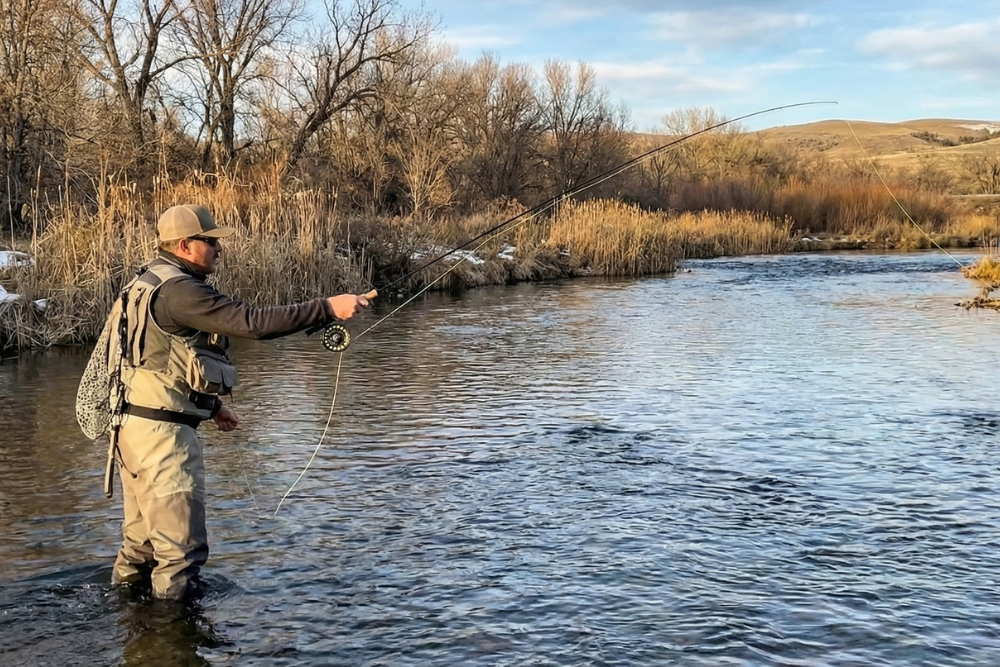
Performance by Technique & Species
Understanding how the Foundation performs across specific techniques helps you determine whether it matches your fishing style. This section breaks down real-world performance with dry flies, nymphs, streamers, and stillwater applications.
Dry Flies
The 4wt and 5wt models deliver accurate, reasonably delicate presentations with standard trout dries (#12–#20) out to 40–50 feet. The fast action helps punch small dries into light wind while the tip’s controlled flexibility still protects 5X–6X tippet from the shock of sudden hook sets. Technical spring creek fishing with #18 Blue-Winged Olives or #20 Tricos is well within the rod’s capabilities.
Nymphing and Dry-Dropper
The 5wt and 6wt versions handle single- or double-nymph rigs with indicators and split shot effectively. Tungsten bead flies, which have become standard for many anglers, cast smoothly without overloading the tip. The rod’s lifting power supports high-sticking in pocket water—quickly picking up line for another cast without excessive false casts that spook fish.
Fishing a hopper-dropper setup (say, a #10 foam hopper with a #14 beadhead trailing) under overhanging willows on a summer afternoon, you’ll appreciate how the Foundation loads quickly for short, accurate deliveries.
Streamers
The Foundation is capable with streamers but isn’t purpose-built as a dedicated streamer broomstick. The 6wt and 7wt models cast weighted streamers and sink-tip lines comfortably for covering water efficiently. On the 5wt, single-hook streamers and small articulated patterns up to about #4–#6 work reasonably well, though very heavy flies may feel slightly tip-heavy during aggressive strip-strikes.
Lakes and Stillwaters
Stillwater fishing with 5–6wt rods suits the Foundation well. Pair it with long leaders, intermediate lines, and small streamers or chironomids for practical stillwater work. The fast action picks up more extended lengths of line from the water for repeated searching casts—essential when you’re covering water to locate cruising trout.
Species Applications
Trout: Fish from 8–20 inches in freestone and tailwater scenarios represent the Foundation’s home turf. The 4–6wt models excel here, whether you’re matching a March Brown hatch or swinging soft hackles through a run.
Bass: Heavier models (6–8wt) cast poppers, deer-hair bugs, and medium-sized Clousers effectively around structure and weed lines. The rod handles the explosive strikes and powerful runs that make warmwater fishing fun.
Carp and Light Inshore: The 7–8wt rods offer enough backbone for larger, more powerful fish while maintaining good casting manners for accurate presentations to tailing carp or redfish on shallow flats.
Pairing the Sage Foundation: Lines, Reels & Leaders
Rod performance depends heavily on the complementary gear. The Foundation pairs best with slightly heavier, modern weight-forward lines that help load the fast blank at typical fishing distances.
Fly Lines
For general trout fishing, consider lines like Rio Gold, Rio Avid Trout, Scientific Anglers MPX, or Airflo SuperFlo Elite. These half-size-heavy, taper-forward designs help the Foundation load more easily at the 25–45 foot range where most trout fishing occurs. The smooth taper and weight distribution complement the rod’s fast action without overwhelming it.
For specialized applications:
- Nymph/indicator fishing (5–6wt): Consider dedicated nymph lines with bright tips for visibility
- Lake fishing (5–6wt): Longer-headed lines that smooth out the casting stroke work well
- Bass and warmwater: Standard bass-taper lines in matching weights handle larger flies effectively
Reels
A mid-arbor or large-arbor reel with a smooth, sealed drag balances the Foundation nicely. Match typical line weights: a 4/5 reel for 4–5wt rods, a 5/6 for 6wt, and so on. Mid-priced reels like the Lamson Remix, Redington Rise, or Sage Spectrum C provide excellent balance between cost and performance—you don’t need a $500 reel to complement a Foundation rod effectively.
Balance and Weight
When setting up your outfit, attach your reel and line, then find the balance point. Ideally, it should rest near the front of the grip, reducing fatigue during long days and improving feel through the casting stroke. If the outfit is too far back, consider a heavier line; if too far forward, a lighter reel or a different line.
Leaders and Tippet
Standard leader recommendations:
- General trout (4–5wt): 9-foot leaders in 4X–5X
- Streamers and bass (6–7wt): 7.5-foot or 9-foot leaders in 2X–3X
- Light salt (8wt): 9-foot leaders with 20–30lb shock tippet for toothy species
Use fluorocarbon for subsurface work (nymphs and streamers) where lower visibility and faster sink rate matter. Nylon works better for dries, offering the suppleness needed for natural drift and subtle presentations.
Complete Outfits
Many fly shops sell pre-packaged Foundation outfits that include a quality line like Rio Gold, backing, a tapered leader, and a protective case. These packages offer great value for anglers who want a ready-to-fish solution without researching component compatibility—particularly appealing for those new to the sport who may feel overwhelmed by the options.
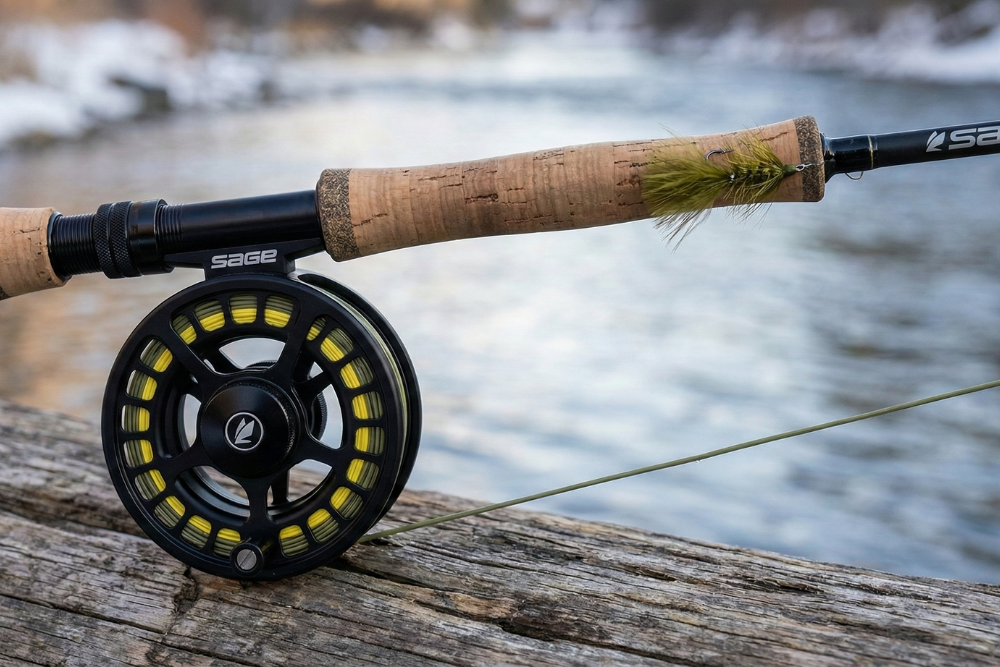
Durability, Warranty & Long-Term Value
One of the Foundation’s significant strengths lies in its long-term ownership value. Robust construction, quality components, and Sage’s warranty support make this a rod you can fish confidently for years.
Durability
Graphite IIIe and Sage’s meticulous build quality create a rod that tolerates typical angler mishaps—occasional bumps against rocks, minor knocks during transport, the general wear of regular fishing—better than many ultra-light, high-modulus rods that sacrifice durability for weight savings. The sturdy guides, quality cork, and secure reel seat all contribute to a fishing tool that holds up through seasons of hard use.
This doesn’t mean the rod is indestructible. High-sticking fish with the rod tip pointed straight up, slamming car doors on rod tips, or stepping on sections will break any fly rod. But under normal fishing conditions and reasonable care, the Foundation proves remarkably resilient.
Warranty
Sage offers a lifetime warranty for the original owner (where applicable by region and purchase date), typically covering manufacturing defects and offering low-cost repair or section replacement for accidental breakage. Keep your proof of purchase and register your rod to make future warranty claims easier.
This warranty support transforms the buying decision from a simple transaction into a long-term relationship with the manufacturer. Many anglers have sent broken sections to Sage and received prompt, professional service that gets them back on the water quickly.
Resale and Backup Value
Because it’s American-made and carries the respected Sage name, the Foundation tends to retain reasonable resale value if you later upgrade to a flagship model. For experienced anglers, it serves as an excellent backup rod to keep in the boat or truck—something you won’t hesitate to grab when conditions are right and your primary rod is rigged differently.
Cost-of-Ownership Perspective
Consider the Foundation as a multi-season or decade-long tool rather than a short-term purchase. That initial mid-range price amortizes impressively over years of fishing trips, especially when backed by Sage’s warranty support. This is the kind of rod you buy once and fish for a decade—or longer.
Who the Sage Foundation Is Best For
The Sage Foundation serves anglers who want serious, American-made performance without jumping straight to $900+ flagship rods. It occupies a valuable middle ground in the market that doesn’t ask you to compromise quality for price.
Ideal User Profiles
Ambitious beginners who already know they enjoy fly fishing and want to skip disposable starter kits will find the Foundation grows with their skills. The forgiving-yet-fast action teaches good habits while delivering satisfying performance.
Intermediate anglers upgrading from budget import rods will immediately notice improvements in line speed, accuracy, and feel. The Foundation represents a meaningful step up that makes every cast more enjoyable.
Experienced anglers needing reliable backup, boat, or travel rods that won’t feel like a compromise on the water appreciate the Foundation’s blend of performance and value. It’s the rod you grab without hesitation when your primary setup isn’t practical.
Fishing Scenarios
- Trout-focused anglers fishing a mix of dry flies, nymphs, and streamers on rivers and streams across North America and Europe
- Warmwater anglers chasing bass and carp with 6–8wt models on lakes and rivers
- Light inshore anglers who want an affordable, US-made option for occasional redfish, sea trout, or schoolie stripers with 7–8wt rods
The Foundation’s fast action that remains manageable, proven Graphite IIIe blank, strong price-to-performance ratio, and warranty-backed durability combine to create a rod that earns its reputation as a dependable first Sage rod and wise long-term investment for freshwater applications of all kinds.
Whether you’re stepping up from a starter rod or adding a reliable backup to your quiver, the Sage Foundation delivers the performance and quality that made Sage one of the most respected brands in the fly fishing world.
FAQ: Sage Foundation Fly Rod
Is the Sage Foundation made in the USA?
Yes, the Sage Foundation is built on Bainbridge Island, Washington, by the same craftspeople who produce Sage’s higher-end rods. “Made in USA” is typically printed above the reel seat. This domestic manufacturing ensures consistent quality control and supports the skilled workforce that has defined Sage’s reputation for over 35 years.
Does the Sage Foundation come with a rod tube?
Each Foundation rod includes a Sage-branded cloth bag and a durable, black nylon-covered rod tube designed for travel and daily storage. The tube features a divided liner that protects individual sections, so no additional case is strictly necessary unless you prefer hard-sided protection for airline travel.
Can I use the Sage Foundation for saltwater fishing?
While the Foundation is primarily marketed as a freshwater rod, the 7–9wt models use corrosion-resistant components (chrome guides, anodized reel seat) and handle light saltwater applications effectively. Redfish, bonefish, and schoolie stripers are all within reach. The essential requirement is to thoroughly rinse your rod with fresh water and dry it after each saltwater session to prevent long-term corrosion.
Is the Sage Foundation too fast for beginners?
While the rod is fast action, its Graphite IIIe construction and progressive taper make it notably more forgiving than ultra-fast flagship rods. Paired with a slightly heavier, user-friendly fly line like Rio Gold or Scientific Anglers MPX, many beginners and early intermediates find the Foundation actually helps them improve quickly. The rod provides feedback about timing without punishing imperfect strokes the way some superb high-modulus blanks can.
What fly line size should I put on my Sage Foundation?
Standard practice is matching line weight to rod weight (5wt line on a 590-4, for example). However, many anglers find slightly overweighted or half-size-heavy lines—like Rio Gold or SA MPX—help the Foundation load more easily at typical fishing distances of 25–45 feet. If you fish primarily at longer ranges or in windy conditions, standard-weight lines may suit you better. Experimentation with your specific casting style will determine the ideal match.