
Fly fishing is an art, and like any art, it requires the right equipment. One of the most essential pieces of an angler’s setup is their fly fishing bag. A functional fly fishing bag can improve your day on the water, keeping crucial fishing gear organized, easy to reach, and moisture-free.
With countless options, selecting the perfect fly fishing bag can seem challenging. This guide will cover everything you need to know about these vital pieces of fly fishing gear. We will explore different types, important features, and offer suggestions to help you choose.
Types of Fly Fishing Bags
There isn’t a single fly fishing bag that works perfectly for every angler or situation. Different designs accommodate various needs, fishing styles, and the amount of gear you carry. Here are the primary types you will find:
1. Chest Packs
Chest packs are compact bags designed to sit high on your chest, often secured with straps around your neck and back. They provide excellent, immediate access to frequently used items like fly boxes containing trout or smallmouth bass flies, tippet spools, and small tools. Many anglers wading shallow streams or covering ground quickly prefer chest packs for their minimal interference and convenience.
These packs typically have limited storage capacity and are best suited for minimalist setups or short fishing trips. They keep essentials before you, making fly changes or leader adjustments swift. Some chest packs even integrate docking stations for nippers or forceps, enhancing their utility.
2. Sling Packs
Sling packs balance storage capacity and accessibility, making them a popular choice. Worn over one shoulder, they rest on your back while hiking or fishing, but can be easily swung around to your chest when you need to access your gear. This design avoids the front clutter of chest packs while keeping items readily available without entirely removing the pack.
Most sling packs provide more room than chest packs, easily holding several fly boxes, a water bottle, a light jacket, and perhaps an extra fly reel or spool. Look for models with comfortable, padded shoulder straps and organized internal compartments. Brands like Orvis fly and Simms offer excellent sling packs suitable for various fishing conditions.
3. Hip Packs
Hip packs, also known as waist packs or lumbar packs, are worn around your waist or lower back. They offer a good compromise in capacity, sitting between the more miniature chest packs and larger sling packs or backpacks. Hip packs keep your upper body completely free, which some anglers find enhances casting motion and overall comfort, especially in warm weather.
These packs are versatile, suitable for both wading and boat fishing scenarios. Many hip packs come with shoulder straps for additional support, especially when carrying heavier loads like multiple fly boxes or larger fishing accessories. They often feature water bottle holders and external attachment points for nets or wading accessories.
4. Backpacks
Fly fishing backpacks provide the largest storage capacity, ideal for anglers undertaking long day trips, hiking-in fishing adventures, or carrying extensive gear. You can easily pack extra layers of fishing clothing, lunch, hydration systems, camera equipment, and a wide assortment of fly boxes for different species, from tiny dry flies to bulky muskie flies. They are also great travel bags for extended fishing trips.
While offering ample space, accessing gear typically requires removing the backpack, which can be less convenient mid-stream than other pack styles. Many modern fishing backpacks incorporate features like integrated net holders, rod tube straps for carrying extra fly fishing rods, and compartments designed for fly reels or reel cases. Look for designs with padded shoulder straps, hip belts, and ventilated back panels for carrying comfort.
5. Vests
Though not technically bags, traditional fly fishing vests serve a similar purpose: organizing and carrying gear. Vests distribute weight across your shoulders and torso using numerous strategically placed pockets. Many anglers appreciate a vest’s intuitive organization and immediate access, with dedicated pockets for fly assortments, tools, leaders, and more.
Vests come in various styles, from classic cotton models to modern mesh versions for hot weather. Some vests offer built-in retractors and docking stations. While perhaps less popular now than packs, a well-designed vest remains a highly effective way to carry fishing gear, especially for traditional trout fly fishing approaches.
6. Boat Bags
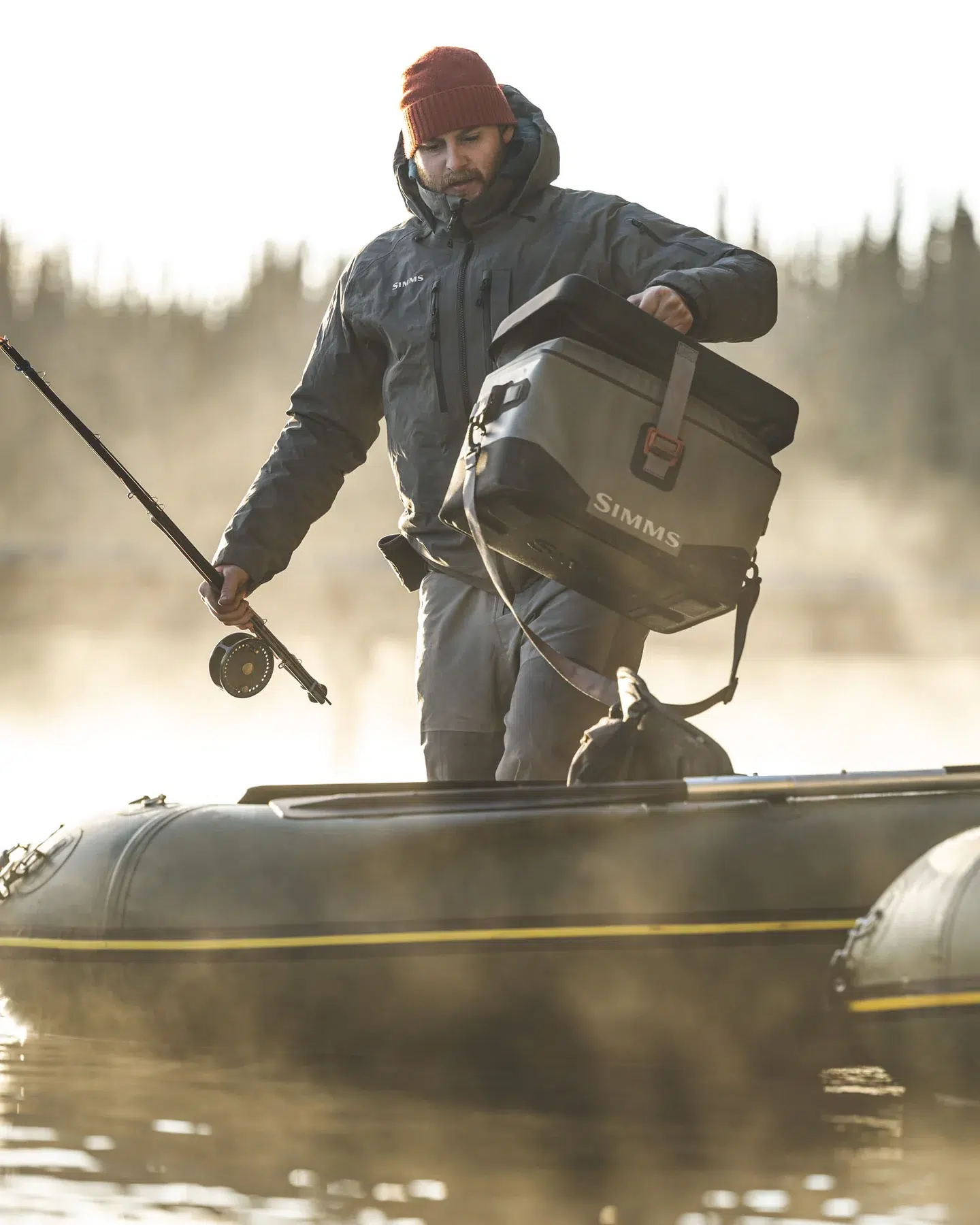
Explicitly designed for boat-based angling, boat bags offer substantial storage and protection for gear that doesn’t need to be constantly carried on your person. These are often larger, structured bags that sit securely on the deck or under a seat. They protect sensitive items like cameras, extra fly reels (perhaps expensive models like Nautilus fly reels, Hatch fly reels, or Abel fly reels), and numerous fly boxes from spray and rough handling.
Many boat bags feature waterproof or highly water-resistant construction, rigid bottoms to maintain shape, and internal dividers for organization. Models like the Simms Dry Creek Boat Bag or similar waterproof bags are excellent for keeping gear dry during transport or unexpected downpours. A good creek boat bag or dry creek boat variant is essential for serious boat anglers needing reliable gear protection.
Key Features to Look for in a Fly Fishing Bag
Beyond the basic type, several features distinguish a truly functional fly fishing bag. Consider these elements when making your selection:
Water Resistance & Waterproofing
Exposure to water is inevitable in fly fishing, whether from rain, spray, wading, or accidental submersion. Good water resistance is therefore essential. Look for bags made from durable water-repellent (DWR) coated fabrics, or fully waterproof bags constructed with TPU-coated materials and welded seams or waterproof zippers.
A truly waterproof bag offers the highest level of protection, keeping contents dry even if dropped in the water. Water-resistant bags effectively shed light rain and splashes. Assess your typical fishing conditions and how critical it is to keep specific gear dry when choosing between water-resistant and fully waterproof options.
Durability
Fly fishing often involves navigating rough terrain, pushing through brush, or accidentally dropping drops on rocky banks. Your fly fishing bag must be built to last. Check for robust materials like high-denier nylon or ballistic fabrics, reinforced stitching at stress points, and high-quality zippers (YKK is a standard benchmark).
A durable bag withstands abrasion, punctures, and the general wear and tear of frequent use. Investing in a well-built bag from reputable brands like Sage Fly, Redington Fly, or Hardy Fly often pays off in the long run. Consider the environment where you fish most often; saltwater fly fishing, for instance, demands corrosion-resistant materials.
Comfort
You might wear your pack for many hours, so comfort is paramount. Look for generously padded shoulder straps or hip belts, breathable mesh back panels to reduce sweating, and designs that distribute weight evenly. An uncomfortable pack can lead to fatigue and detract from your enjoyment on the water.
If possible, try on packs, ideally with some weight inside, to gauge how they feel. Adjustability is also important; straps should allow you to customize the fit for your body size and the layers of fishing clothing you might be wearing, such as men’s or women’s waders.
Organization
Effective organization separates a great fishing bag from a frustrating one. Look for a thoughtful layout with multiple compartments, dividers, and pockets sized appropriately for standard fly fishing gear. Features like built-in or removable fly patches, specific holders for tippet spools, internal zippered pockets for valuables, and external attachment points (like D-rings or MOLLE webbing) add significant value.
Consider what you typically carry. Do you need space for large fly boxes filled with bass flies or saltwater flies? Or perhaps smaller compartments for euro nymphing essentials? Think about how you like your gear arranged for quick access during critical moments on the water.
Accessibility
How easily can you get to your gear when you need it? This is a critical factor influenced by bag type and design. Chest packs offer the most immediate access, while backpacks usually require removal.
Sling packs and hip packs strike a good balance for many. Consider zipper placement, opening styles (clamshell vs. top-load), and whether you can operate closures easily with one hand. The goal is minimizing fuss with your pack and maximizing your fishing time.
Capacity and Size
Choose a bag size appropriate for the gear you need to carry on a typical outing. A small hip pack might be perfect for targeting panfish flies on a local pond, but it is wholly inadequate for a full day chasing steelhead flies, where extra layers and larger fly assortments are necessary. Think realistically about your needs—carrying a half-empty large pack can be as cumbersome as trying to overstuff a small one.
Consider not just fly boxes but also space for leader wallets, extra fly lines (perhaps from Scientific Anglers), water, snacks, sun protection items, and potentially a backup fly reel like a Lamson or Redington fly reel. Larger packs might also accommodate wading accessories or small reel cases.
Ready to Elevate Your Skills?
Fly Fishing Classes
Whether you're just getting started or looking to refine your technique, our expert-led fly fishing classes will get you on the water with confidence. Browse our upcoming classes and book your spot today—spaces fill fast!
Modularity and Attachment Points
Many modern fly fishing bags incorporate systems for attaching additional gear externally. This might include Hypalon tabs for securing zingers or nippers, straps for a net or wading staff, sleeves for water bottles, or MOLLE webbing for adding compatible pouches. These features allow you to customize your setup and keep frequently needed tools within easy reach.
Being able to attach items like a net or rod tube externally frees up internal space and provides convenient carrying options. Assess the types and placement of attachment points to see if they align with how you prefer to rig your gear.
Here’s a simple comparison table of common pack types:
| Pack Type | Primary Benefit | Typical Capacity | Best For |
|---|---|---|---|
| Chest Pack | Maximum Accessibility | Low | Minimalist setups, quick trips, frequent fly changes. |
| Sling Pack | Balance of Access & Capacity | Medium | All-around use, day trips, carrying moderate gear. |
| Hip Pack | Unrestricted Upper Body | Low to Medium | Warm weather, anglers preferring waist carry, moderate gear. |
| Backpack | Maximum Capacity | High | Long hikes, carrying extra layers/gear, extended fishing trips. |
| Vest | Distributed Load & Access | Medium | Traditional approach, highly organized pocket system. |
| Boat Bag | Bulk Storage & Protection | Very High | Boat fishing, keeping gear dry and organized onboard. |
Top Picks for Fly Fishing Bags
Based on angler feedback and feature sets, here are some highly regarded fly fishing bags across different categories:
1. Fishpond Summit Sling
This sling pack consistently receives high marks from anglers. It combines excellent comfort, durable construction, and innovative organizational features, including a signature molded fly bench. The water-resistant fabric and reliable YKK zippers make it a trustworthy companion on many fishing trips.
2. Orvis Safe Passage Sling Pack
Orvis has a strong reputation in the fly fishing community, and this sling pack reflects its quality standards. It offers ample, well-organized storage, including internal pockets and dividers. Its ergonomic design makes it comfortable to wear and easy to swing around to access your fly boxes or other fishing accessories.
3. Simms Freestone Chest Pack
For anglers preferring the chest pack style, the Simms Freestone is a popular choice. It offers surprising capacity for its compact size, featuring multiple pockets and attachment points. A water-resistant finish and comfortable harness system make it suitable for various conditions, whether casting dry flies or wet flies.
4. Patagonia Stealth Hip Pack
This hip pack appeals to anglers who value lightweight design and efficiency. It boasts clever organizational pockets, durable and water-resistant materials, and external attachment options. The comfortable, padded waist belt ensures it stays put during active wading or casting for smallmouth or peacock bass species.
5. Vedavoo Beast Sling Pack
Known for its bombproof construction and made in the USA quality, the Vedavoo Beast Sling is built for demanding use. Its unique design provides excellent organization and comfort. Vedavoo packs are highly regarded for their durability and practical features tailored to dedicated anglers.
6. Simms Dry Creek Boat Bag
The Simms Dry Creek series is a benchmark when maximum water protection and storage are needed on a boat. These waterproof bags feature robust construction, often with roll-top closures or waterproof zippers, to keep sensitive gear completely dry. They are ideal for protecting cameras, spare fly reels (like Sage fly or Nautilus fly reels), and fly-tying materials during transport or rough weather.
Unforgettable days on the water
Guide Services
Our guides at Fly Fishing Specialties are comprised of patient, hard-working professionals, dedicated to showing customers an enjoyable day on the water. Group trips and other custom outings are available upon request.
How to Choose the Right Fly Fishing Bag for You
Selecting the best fly fishing bag involves matching its features and style to your angling habits. Consider these points:
Fishing Style and Target Species
How do you typically fish? If you spend hours wading deep rivers, a higher-riding chest or sling pack might be preferable to a hip pack. If you primarily fish from a drift boat or flats skiff, a dedicated boat bag combined with a smaller pack for essentials could be ideal.
Consider your target species as well. Carrying large fly boxes for muskie or saltwater flies requires more space than smaller boxes for trout or panfish flies. Techniques like euro nymphing might necessitate specific storage for weighted flies and long leaders.
Trip Duration and Gear Needs
Short evening sessions near home might only require a small chest or hip pack for essentials. Full-day excursions or backcountry fishing trips necessitate larger packs, such as backpacks or bigger sling packs, to accommodate food, water, extra clothing layers, and potentially emergency gear or sun protection.
Think about all the fishing gear you typically carry beyond flies and terminal tackle. Do you bring multiple fly reels? Extra fly lines? A camera? Ensure the pack has adequate, organized space for everything you need on fishing adventures.
Climate and Environment
Fishing in rainy climates like the Pacific Northwest demands excellent water resistance or fully waterproof construction. In hot, humid weather, breathability and ventilation in shoulder straps and back panels become crucial comfort factors. Consider the terrain, too; dense brush requires durable, snag-resistant materials.
Saltwater fly fishing introduces the challenge of corrosion. If you frequently fish in saltwater environments, look for bags with corrosion-resistant zippers and hardware. Rinsing your gear after saltwater use is always recommended.
Integration with Other Gear
How will the pack work with your other gear, like your wading system? Ensure the straps don’t interfere uncomfortably with your waders (men’s or women’s) or wading boots. Check if there’s a convenient way to attach your net or wading staff if you use one.
Consider how you carry your fly rod or fly rods. Some packs offer straps or sleeves explicitly designed for securing rod tubes, which is helpful when hiking into fishing spots. Compatibility with hydration reservoirs might also be a factor for longer outings.
Personal Preference and Budget
Ultimately, personal comfort and preference play a significant role. What feels good and functions intuitively for one angler might not suit another. If possible, try on different styles before buying, perhaps even loading them with some weight to simulate actual use.
Fly fishing bags range widely in price. Set a budget, but remember that durability and features often correlate with cost. Sometimes, investing more upfront for a quality bag from a reputable manufacturer can save money in the long run. Look out for deals or consider a gift card if purchasing for someone else.
Caring for Your Fly Fishing Bag
Proper care is important to ensure your fly fishing bag lasts for many seasons. Follow these simple maintenance tips:
- Clean your bag regularly, especially after fishing in muddy or saltwater conditions. Use fresh water and a soft brush to remove dirt, sand, and salt residue.
- Allow the bag to air dry completely before storing it, preferably out of direct sunlight. This prevents the growth of mold and mildew, which can damage fabrics and cause odors.
- Store your clean, dry bag in a cool, dry place away from excessive heat or UV exposure. Avoid crushing it under heavy items.
- Periodically check zippers for smooth operation. Clean grit from zipper teeth and consider applying a zipper lubricant if needed.
- Inspect seams, straps, and buckles for signs of wear or damage. Address any minor issues promptly before they become significant problems.
- If your bag has a DWR finish, it may need refreshing over time. To maintain water resistance, reapply a suitable water-repellent treatment according to the manufacturer’s instructions.
Conclusion
Your fly fishing bag is far more than just a container for your equipment; it’s an essential tool that directly impacts your efficiency and enjoyment on the water. A well-chosen bag keeps your fly boxes, tools, leaders, and other fly fishing gear organized, protected, and readily accessible. This allows you to focus on casting, presentation, and landing fish.
Whether you choose the immediate access of a chest pack, the balanced design of a sling pack, the waist-level freedom of a hip pack, the capacity of a backpack, or the protection of a boat bag, the ideal choice aligns with your specific needs. Think about your fishing style, the duration of your trips, the environments you fish in, and the features that matter most. Having the right fly fishing bag can make pursuing freshwater fly or saltwater fly species more productive and pleasant.
Remember that the best fly fishing bag isn’t necessarily the most expensive or feature-packed one; it’s the one that fits you comfortably and functions seamlessly with how you fish. Take your time, consider the options carefully, and select a reliable companion that will serve you well on countless fishing adventures to come, whether you’re chasing surface bass, wary trout, or mighty steelhead.
FAQs
- Chest Packs: Compact, high accessibility, minimal storage.
- Sling Packs: Balanced capacity and access, worn over one shoulder.
- Hip Packs: Worn around waist, good upper body freedom.
- Backpacks: Largest capacity, suitable for long trips.
- Vests: Not bags but organized gear carriers with many pockets.
- Boat Bags: Large, waterproof, designed for boat fishing gear protection.
- Chest packs provide maximum accessibility because they rest on your chest for immediate reach.
- Sling packs also offer easy access by swinging the pack around to the front.
- High-denier nylon or ballistic fabric construction.
- Reinforced stitching at stress points.
- Durable, high-quality zippers (e.g., YKK).
- Water-resistant or waterproof materials depending on conditions.
- Extremely important due to exposure to rain, splashes, and accidental submersion.
- Water-resistant bags handle light rain and splashes.
- Fully waterproof bags (with TPU coating, welded seams) protect gear in heavy wet conditions.
- Yes, if you select a bag with padded shoulder straps, hip belts, and breathable mesh back panels.
- Adjustable straps improve fit and comfort, especially when worn with waders.
- No. Backpacks are best for long day trips or hike-in fishing where carrying extra gear and layers is required.
- For short trips or minimalist setups, chest packs, sling packs, or hip packs are more convenient.
- Yes. Vests offer excellent organization and distribute weight evenly.
- Preferred by anglers who value quick access to many small items and traditional fishing methods.
- Provides large, secure, waterproof storage for sensitive gear while fishing from a boat.
- Protects cameras, spare reels, and multiple fly boxes from water and rough handling.
- Choose a sling pack if you want more storage and easy access without front clutter.
- Choose a hip pack if you prefer unrestricted upper body movement and lighter loads.
- Many modern bags have attachment points like Hypalon tabs, D-rings, MOLLE webbing.
- These allow securing nets, nippers, water bottles, rod tubes, or hydration systems externally.