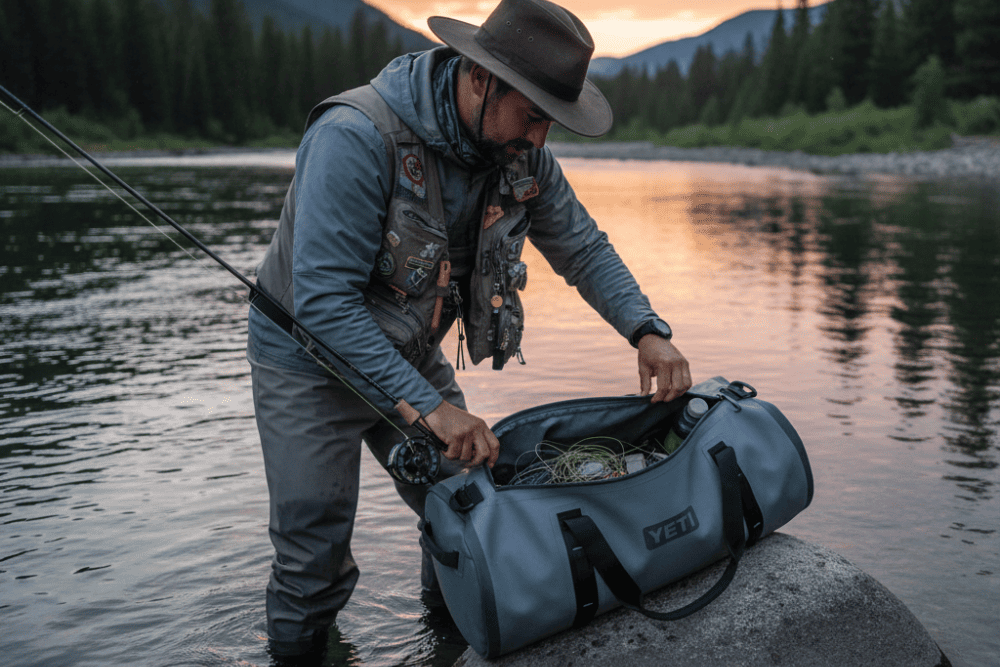

You have expensive gear that needs to stay dry. It’s the nagging thought in the back of your mind on every fishing trip. One wrong move, one leaky boat, or one surprise downpour could ruin your camera, your extra clothes, or worse.
You need something more than just a regular bag; you need a fortress. The Panga submersible Yeti duffel bag might be the answer you’ve been searching for. We all know the name Yeti and their legendary hard coolers and soft coolers, which are built to withstand just about anything.
They applied that same obsessive engineering to create a Yeti duffel bag that is entirely waterproof and incredibly tough. This is not your average gym bag. It is a purpose-built shield for your most critical equipment.
What Exactly Is the Yeti Panga Duffel?
Think of the Panga not as one of many duffel bags, but as a portable, flexible vault for your gear. It was built for people who spend time in the harshest conditions. People like fly fishers, whitewater rafters, and serious campers cannot afford to have their equipment fail.
Its main job is simple: to keep water out completely. It is not just “water-resistant” where a drizzle is okay. We’re talking fully submersible, meaning you could drop it in the river, and everything inside would stay bone-dry.
This level of protection is a step above a standard dry gear case, offering more flexibility and capacity. It’s a bag with a clear purpose, where every component serves the ultimate goal of keeping the elements at bay. Let’s look at what makes it work so well.
Shop Yeti Products
The Core Features That Make This Yeti Duffel Bag Stand Out
You pay a premium for Yeti products, and that price is expected to come with top-tier performance. The Panga duffel is no exception, and its features show where that money goes. It’s an investment in keeping your valuables safe.
The HydroLok Zipper: An Airtight Seal
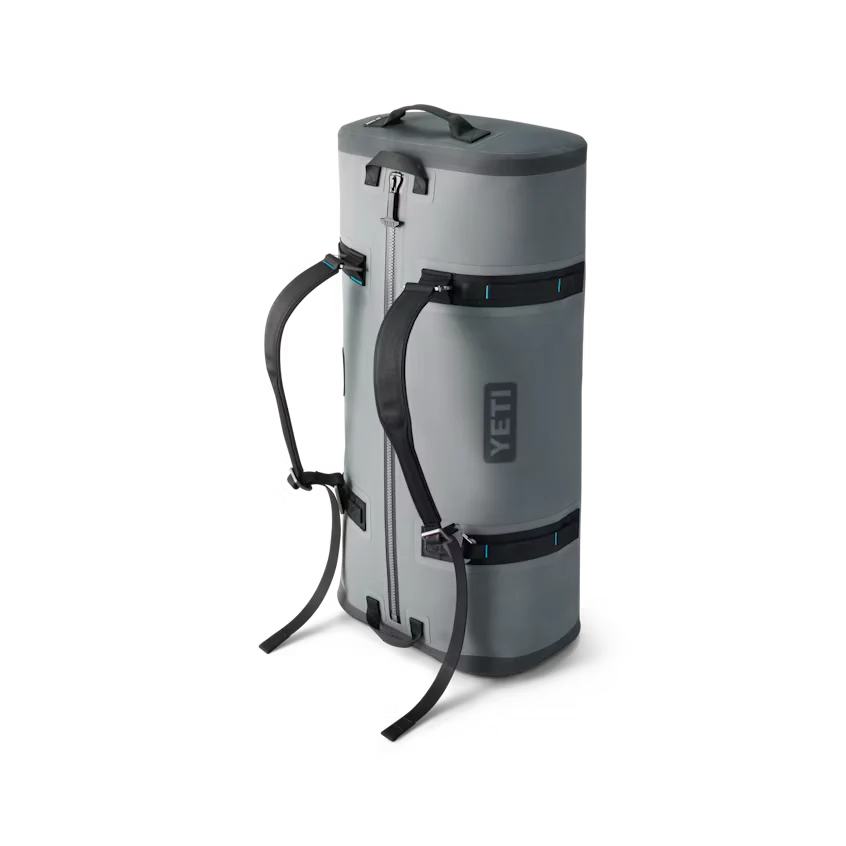
The star of the show is the zipper. It’s not the kind you find on a jacket or a typical travel duffel. This is a HydroLok zipper, similar to what you’d find on a high-end drysuit for scuba diving.
When you pull it shut, it forms a tooth-and-groove seal that is 100% airtight and waterproof. This design enables the bag to be fully submerged without a single drop of water entering. Other bags use zipper flaps or roll-top closures, which can fail under pressure or if not closed perfectly.
The zipper is intentionally tough to pull, which is a good thing because it means a serious closure is being formed. It’s the most critical feature that makes the Panga a truly waterproof duffel. This level of security is a massive confidence booster in the field.
The ThickSkin Shell: Basically Armor
The bag’s body is made from what Yeti calls its ThickSkin Shell. This is a high-density nylon with a thick, beefy TPU lamination. The result is a material that feels nearly indestructible.
It’s completely resistant to punctures and scrapes. You can drag this bag across rocks, toss it into the bed of a truck, or have it scrape against tree branches without worrying about a tear. The seams are welded together with radio frequency technology, meaning there are no stitches for water to sneak through.
This durable shell comes in several colors, from the classic Charcoal to vibrant options like King Crab, Rescue Red, and Firefly Yellow. You might also find special editions like Black Forest, Gold Coast, Cape Taupe, or the effective Wetlands Camo. This material is also found on other products like the DayTrip soft coolers, showing Yeti’s confidence in its durability.
DryHaul Straps: More Comfortable Than You’d Think
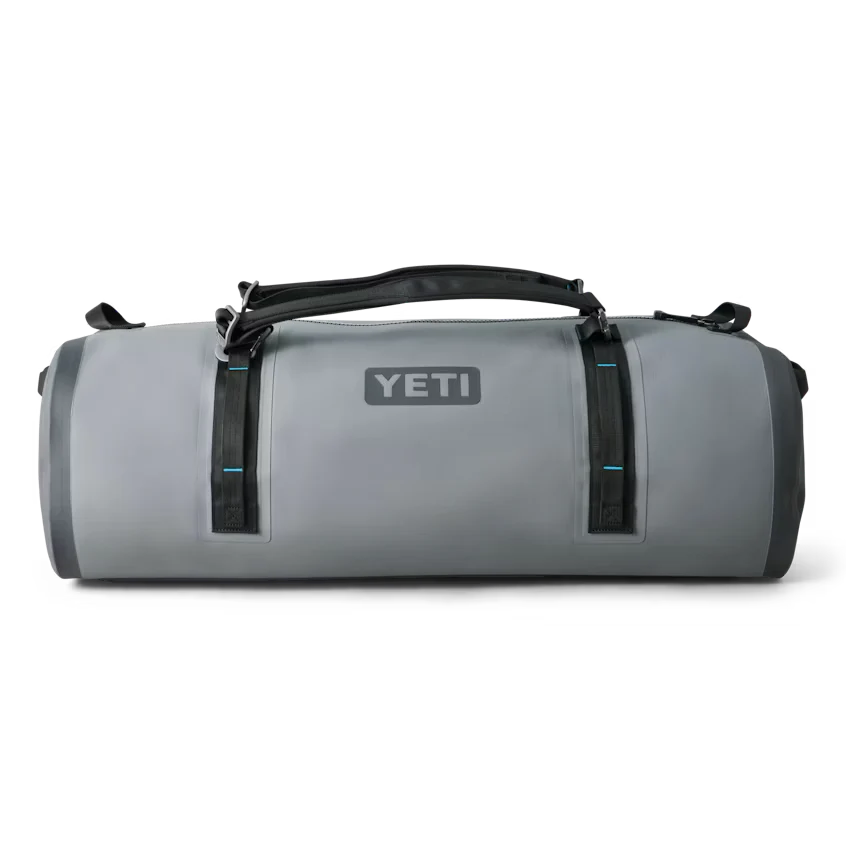
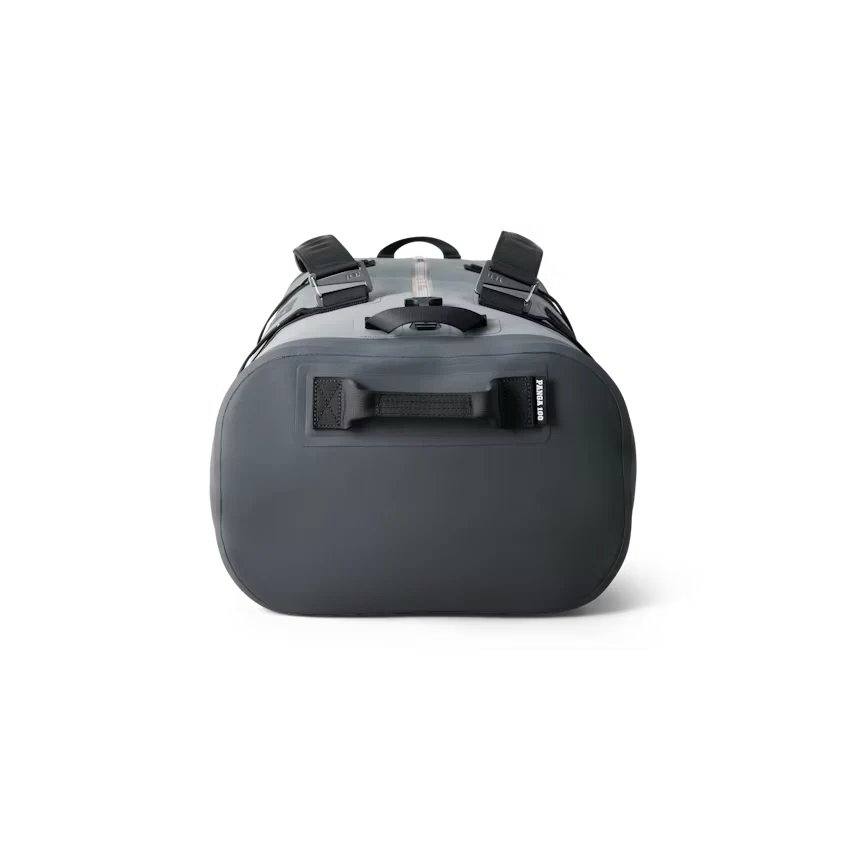
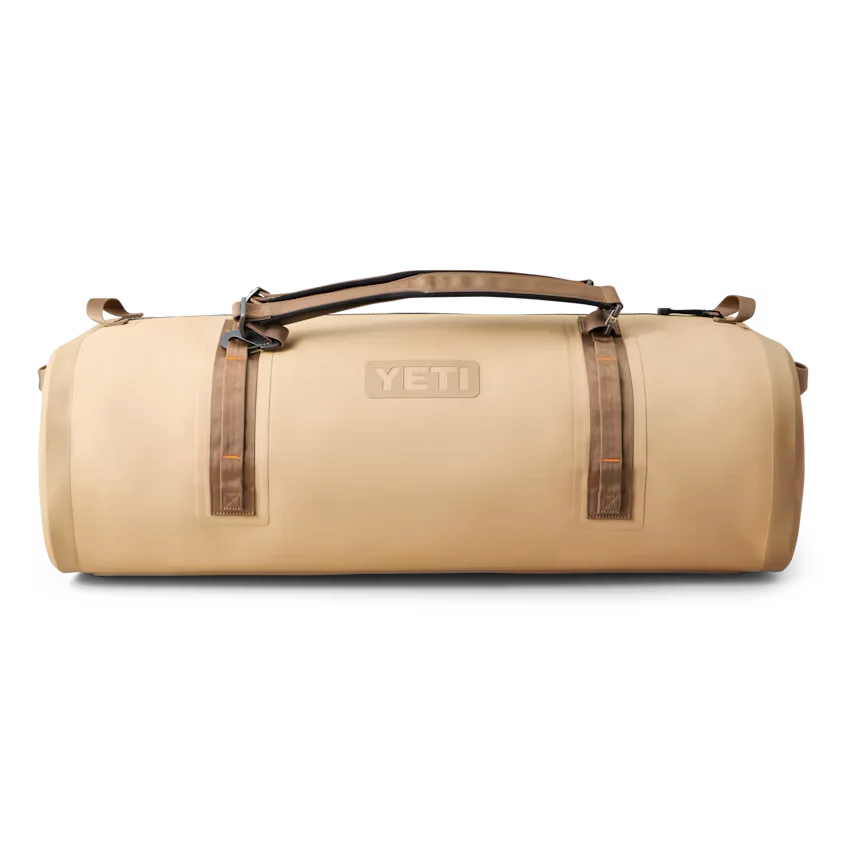
Carrying a heavy bag full of gear can be a pain. Yeti thought about this with their DryHaul Straps. These straps are durable and versatile, allowing you to carry the bag in various ways depending on your needs.
You can carry it like a standard duffel with the handles. Alternatively, you can easily convert the straps to use it as a backpack for longer walks to your fishing spot or through an airport. They are surprisingly comfortable for a bag this rugged and have multiple lash points for attaching other gear, like a travel bottle or small gear case.




Simple, Yet Smart Interior
Inside the Yeti Panga, it’s all about maximizing space. You will not find a dozen little compartments. It’s one ample, cavernous space that lets you pack oversized, bulky items like waders, boots, or camera equipment.
To keep things from becoming a jumble, using packing cubes is a great strategy. There are two zippered mesh pockets on the inside for organization. These are perfect for keeping small essentials like your keys, wallet, or fishing license easy to find.
This simplicity means fewer seams and less complexity, which contributes to its overall durability and waterproof integrity. It easily holds other essentials like Yeti water bottles, Rambler insulated food jars, and even Rambler insulated bowls for multi-day trips.
Panga Sizes: Finding Your Perfect Fit (50L, 75L, & 100L)
Choosing the right size is critical to getting the most out of your Panga. Yeti offers three main sizes, each suited for a different trip length and purpose. This brief buying guide can help you decide.
- Panga 50: This is the smallest of the duffel bags, making it ideal for day trips or as a rugged carry-on. It’s perfect for protecting a camera, a change of clothes, and other commuter essentials.
- Panga 75: The middle ground and often the most popular choice. It’s large enough for a weekend camping trip or a few days on the boat, holding clothing, food, and some gear without being overly bulky.
- Panga 100: This is the expedition-sized beast. If you’re going on a multi-day rafting trip or need to haul gear for the whole family, this is the bag you want. It can easily swallow waders, sleeping bags, and all your dry gear.
Here is a simple breakdown to compare the models.
| Model | Best For | Carry-On Friendly? |
|---|---|---|
| Panga 50L | Weekend trips, camera gear, carry-on luggage | Yes (check with airline) |
| Panga 75L | Multi-day adventures, camping, boating | No |
| Panga 100L | Extended expeditions, group gear, bulky items | No |
Putting the Panga to the Test: Real-World Scenarios
A feature list is one thing, but how does this bag actually perform when you need it most? Here are a few situations where the Panga really proves its worth. These are the moments that justify its price tag.
Imagine you’re on a multi-day float trip down the river. The bag is at the bottom of the boat, getting splashed all day long. A storm rolls in, and everything gets drenched, but with the Panga, you know your change of clothes, sleeping bag, and electronics are perfectly safe.
Or think about those backcountry fishing trips where you protect your great catches. You might have to cross a creek or deal with muddy banks. You can set the bag down anywhere without a second thought, and if it gets covered in mud, you hose it off when you get home.
It also works great for travel. Air travel can be rough on luggage. The Panga can handle being thrown around by baggage handlers, and if it’s left out on a wet tarmac during a storm, your contents are fully protected from the elements.
Ready to Elevate Your Skills?
Fly Fishing Classes
Whether you're just getting started or looking to refine your technique, our expert-led fly fishing classes will get you on the water with confidence. Browse our upcoming classes and book your spot today—spaces fill fast!
Is the Panga Duffel Really 100% Submersible?
This is the big question, and the answer is an emphatic yes. Yeti claims the bag is fully submersible, and countless tests from independent reviewers back this up. Some have held it underwater for 30 minutes with absolutely no leaks.
The combination of the airtight HydroLok zipper and the RF-welded seams creates a barrier that water can’t get through. This is what truly separates it from lesser duffel bags. It provides total protection for your dry gear.
You do have to make sure the zipper is completely closed. It takes a good, firm pull to seal it, but once it’s locked, it’s secure. Yeti even includes a small tube of zipper lubricant, which you should apply from time to time to keep the zipper operating smoothly and to maintain its waterproof integrity.
Proper Care and Maintenance for Your Panga
To get years of reliable service from your Panga, a little maintenance is needed. The bag is tough, but taking care of it ensures it performs when you need it most. Following some expert advice will protect your investment.
First, keep the ThickSkin Shell clean by wiping it down with a damp cloth and mild soap. For tougher grime, a soft-bristle brush can be used. Always rinse it thoroughly and let it air dry completely before storing.
Most importantly, maintain the HydroLok Zipper. Apply the included lubricant to both sides of the zipper track every few months or after prolonged use. This keeps the seal tight and makes it easier to open and close, preventing damage to the interlocking teeth.
The Panga Family: More Than Just a Duffel
The Panga technology isn’t limited to duffel bags. Yeti has expanded the line to include other 100% waterproof options. These products work together to create a complete system for protecting your gear from water.
The Panga Backpack offers the same submersible protection in a more mobile, hands-free design. It is perfect for anglers who need to hike into remote spots. For smaller items, the Sidekick Dry gear case provides a compact, waterproof pouch that can be attached to the duffel’s lash points for quick access.
Whether you’re looking at the original duffels, the Cayo Backpack, or another piece from the collection, the core principles of extreme durability and waterproofness remain. This creates a reliable ecosystem for any adventurer.
Shop Yeti Products
Who Actually Needs This Bag?
Let’s be honest for a second; not everyone needs a Yeti Panga. If you’re looking for a bag to take to the gym or for an overnight trip to a hotel, this is overkill. The high price and rugged build are for a specific type of person.
You need this bag if your adventures take you into wet or unpredictable environments. This includes serious anglers, kayakers, boat owners, and anyone who camps in rainy climates. When you’re packing, you can mentally put a checkbox next to “gear is safe.”
If you are carrying expensive cameras, drones, or other electronics into the wild, this bag is a form of insurance. It’s for people who value absolute reliability. The peace of mind that comes from knowing your critical gear is safe is the real product you are buying.
The Investment: Why the High Price Tag?
There’s no avoiding it; the Panga is expensive. So why does it cost so much? You’re paying for serious research and development, as the technology in the HydroLok zipper alone is a big part of it.
You are also paying for the highest quality materials available, as the ThickSkin shell is not cheap fabric. You are getting an engineered material designed to last for a lifetime of hard use. The regular price reflects this quality, though you can sometimes find a sale price during promotional events.
Finally, you’re paying for the Yeti brand name and its Texas strong heritage. That name carries a reputation for making products that do what they claim to do, without compromise. The long-term value comes from buying one bag that will last, rather than replacing cheaper bags over and over again.
Conclusion
The Yeti Panga submersible yeti duffel bag is not just another piece of luggage. It is a highly engineered piece of gear designed for extreme situations where failure is not an option. It is the fortress for your gear that you were looking for at the start.
With its armor-like shell and completely waterproof zipper, it offers a level of protection that few other bags can match. It’s a serious investment, but if you need to keep your gear bone-dry no matter what, it’s one of the best choices you can make.
For adventurers who need equipment that is as tough and reliable as they are, the Panga delivers. It provides the confidence to go further and push harder, knowing your essentials are completely protected from the elements.